Black Streaks on Your Roof: Algae, and What to Do
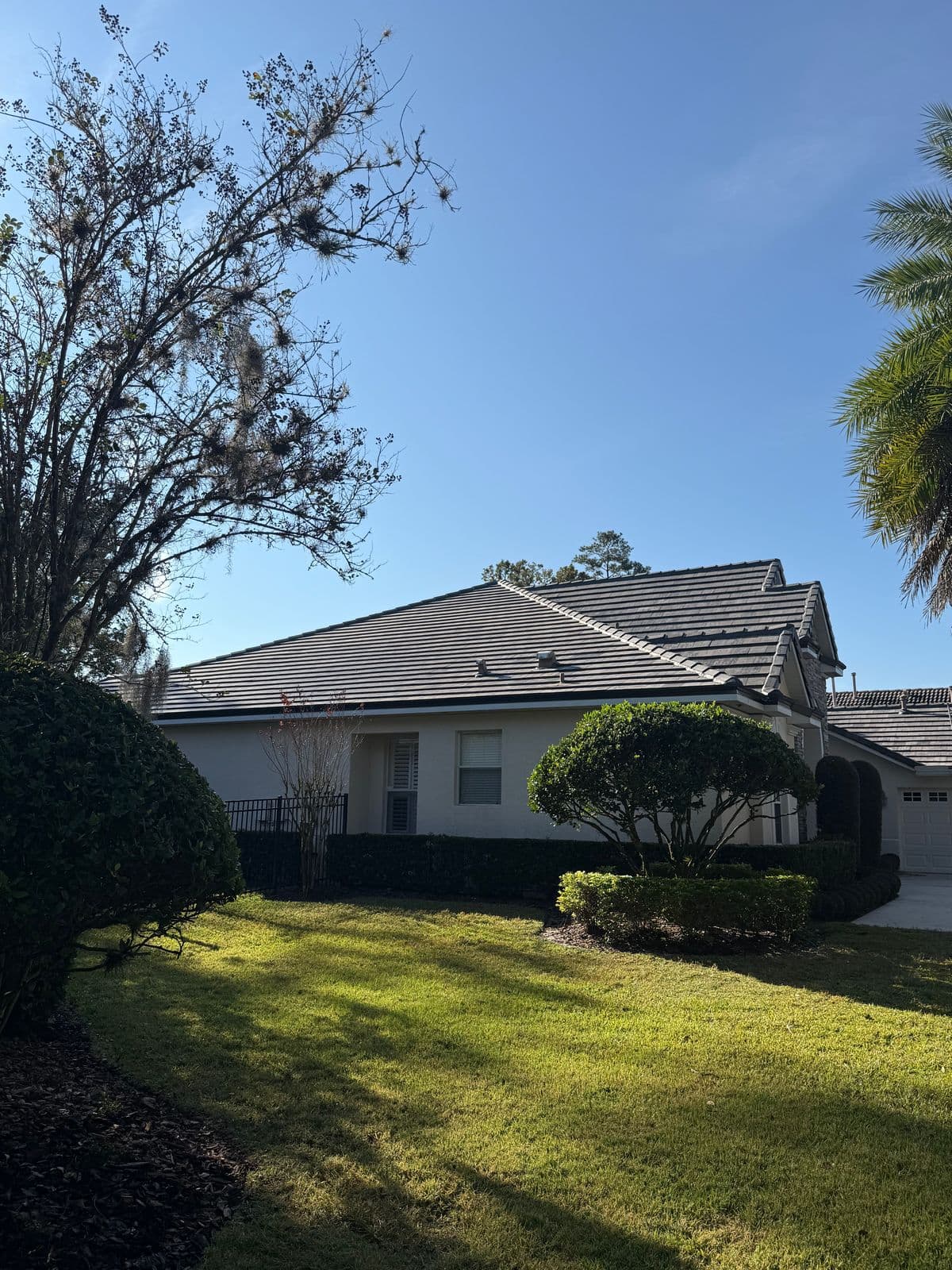
It Is Not Dirt
The dark streaks running down a Central Florida roof are a blue-green algae called *Gloeocapsa magma*. It feeds partly on the limestone filler used in asphalt shingles, and it thrives in exactly what we have here: heat, humidity, and long periods of moisture.
The streaking pattern is characteristic. It runs downward, is heaviest on north-facing slopes that stay damp longest, and is often worst directly below sections that hold moisture — under a chimney, beneath overhanging branches, or below a roof plane that shades the one under it.
Does It Actually Damage the Roof?
Mostly indirectly, and the honest answer is that it matters less than most people assume and more than nothing.
It holds moisture. The colony keeps the shingle surface damp longer after rain, which does not help a material that is already fighting humidity.
It darkens the surface. A blackened roof absorbs more solar radiation, which raises surface temperature and accelerates the thermal aging that already limits roof life here.
It loosens granules over time as it works into the surface.
What it does not do is eat holes in your roof or cause leaks directly. A roof with heavy streaking is not an emergency. It is a maintenance item and a cosmetic one.
What Not To Do
Do not pressure wash an asphalt roof. This is the single most common and most expensive mistake. High pressure strips granules — the layer that protects the asphalt from UV — and can take years off the roof in an afternoon. It also drives water under the shingle courses.
Do not use undiluted bleach or harsh acids. These damage landscaping, corrode metal flashing and gutters, and can affect the shingle itself.
Do not walk the roof to do it yourself unless you are confident and equipped. Wet, algae-covered roofing is genuinely slippery.
What Works
The accepted approach is a soft wash: a low-pressure application of a cleaning solution appropriate to the roof type, left to work, then rinsed gently. No mechanical scrubbing, no high pressure.
Done properly it kills the colony rather than just removing the visible layer, which is why the results last longer than a wash that only cleans the surface.
Landscaping should be wet down before and rinsed after. Metal components should be protected.
Preventing the Return
Trim overhanging branches. Shade and retained moisture are what the algae wants. Cutting them back changes the local conditions more than anything else you can do.
Clear debris. Leaves and needles hold moisture against the surface and give the colony a foothold.
Check drainage. Sections that stay damp after everyone else's roof has dried are the sections that streak first.
Consider zinc or copper strips near the ridge on a roof that streaks persistently. Rainwater carries trace metal down the slope, which suppresses growth. It is not a cure, but it slows recurrence noticeably.
At Replacement, Choose Differently
If a roof is being replaced anyway, algae-resistant shingles are worth specifying. They incorporate copper granules that inhibit growth, and most major manufacturers offer them across their architectural lines. In this climate the modest premium is easy to justify — it is one of the few product upgrades whose benefit is visible from the street a decade later.
The Practical View
Streaking on a sound roof is a cosmetic problem with a slow secondary cost. Treat it, do not panic about it, and above all do not let anyone pressure wash it.
Streaking on a roof that is already fifteen-plus years old is a different conversation. At that point the money is usually better spent assessing the roof's remaining life than cleaning a surface that is near the end of it.
We handle roof repair in Eustis, roof repair in Fern Park, roof repair in Four Corners and roof repair in Fruitland Park, and we are happy to tell you which of those two conversations your roof is actually in.